
SPIRITOAGE: USING WOOD AS AN ALTERNATIVE TO BARRELS
Aging in wood is one of the most important stages in the production of whiskey, rum, brandy, and other premium spirits. During aging, extractive, transformative, and oxidative processes occur simultaneously, contributing to the aromatic profile, color, and structure of the final product. Wood releases aromatic compounds, promotes the transformation of certain molecules present in the distillate, and helps reduce undesirable notes, particularly sulfur compounds.
For this reason, aging is traditionally considered a fundamental step in developing the sensory quality of a spirit. However, the use of barrels involves long lead times, high costs, and natural variability between batches, which can make it more challenging to control the final result.
Today’s market increasingly demands an efficient approach to aging: achieving aromatic complexity, identity, and sensory quality while maintaining economic sustainability and production flexibility. In this context, wood derivatives represent a viable technological alternative to traditional barriques.
The Role of Oak in Aromatic Development
The quality of the final product depends first and foremost on the choice of raw material. The oak species most commonly used in the spirits industry are Quercus alba (American oak), Quercus petraea, and Quercus robur (European oak), each characterized by a different chemical composition and specific aromatic precursors.
American oak tends to express sweeter, vanilla-like profiles, thanks to the higher presence of whisky lactones derived from hydrolysis and other chemical reactions involving wood-bound lipids and lignin-derived compounds. European oaks, on the other hand, generally contribute greater structure and intense spicy and tannic notes.
Toasting: The Step That Defines the Sensory Profile
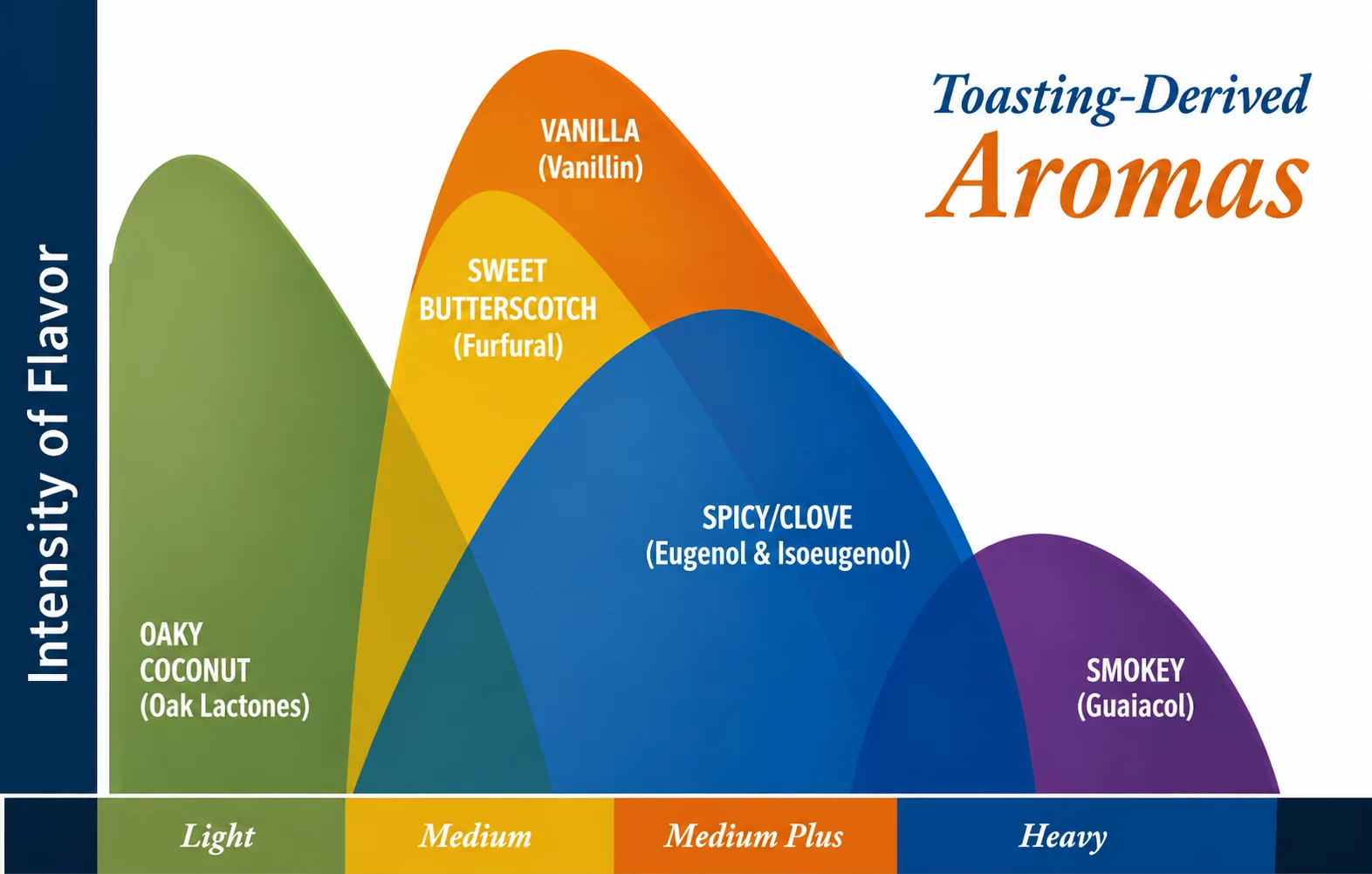
Toasting profoundly alters the aromatic composition of the wood. During this process, lignin, hemicellulose, and other structural components are broken down, generating molecules responsible for the primary sensory characteristics associated with aging.
Among the compounds of greatest interest are:
- vanillin, associated with vanilla notes;
- whiskey lactones, responsible for coconut and sweet sensations;
- eugenol, which contributes to spicy notes;
- guaiacol, associated with smoky nuances;
- furfural and its derivatives, responsible for the toasted and caramelized characteristics.
Managing the toasting process is therefore a fundamental tool for modulating the aromatic contribution of the wood and crafting the desired profile.
Why choose wood derivatives?
While barrels remain the historical standard for aging, wood derivatives offer producers a level of control that is difficult to achieve through traditional aging alone.
Thanks to their high surface area, wood chips allow for faster and more efficient extraction of aromatic compounds, significantly reducing the time needed to achieve the desired profile. At the same time, they improve the reproducibility of the process and limit the impact of variables that are difficult to control, such as barrel heterogeneity or losses due to the angel’s share.
For the producer, this translates into concrete benefits:
- reduced aging costs;
- greater environmental sustainability;
- lower capital tied up;
- high reproducibility between batches;
- the ability to customize the distillate’s flavor profile;
- greater flexibility in production management.
SpiritoAge: A Tool for Managing Aging
The SpiritoAge line was created with the goal of offering producers a technical tool to manage and customize the influence of wood during the distillate’s aging process. It is not merely an alternative to barrels, but a tool capable of providing high reproducibility, rapid intervention, and maximum flexibility in shaping the sensory profile.
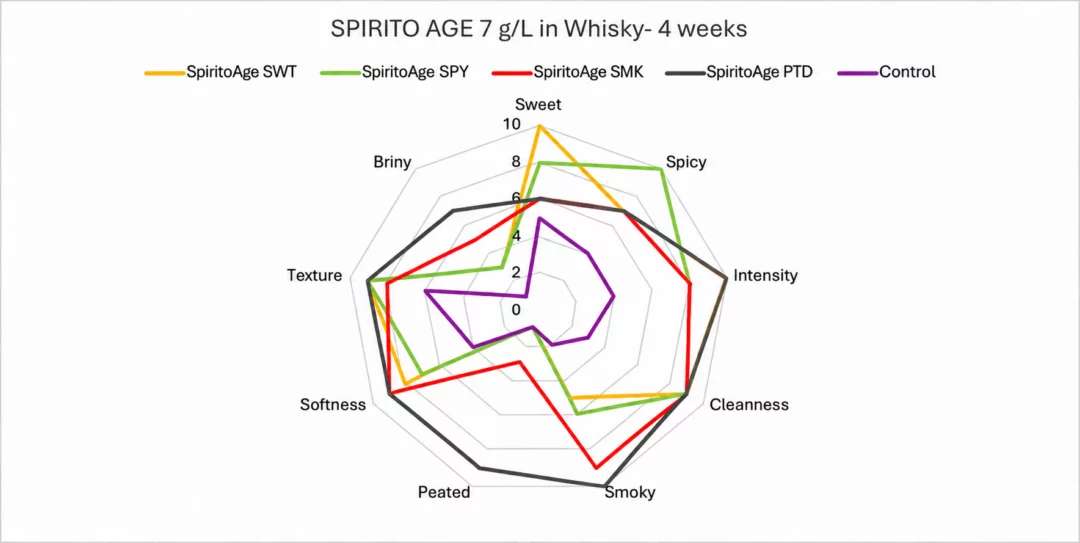
SpiritoAge SWT
Sweetness, roundness, and smoothness
Crafted from select American oak, SpiritoAge SWT is designed for producers who wish to enhance the perception of sweetness and body on the palate, helping to harmonize young or particularly high-alcohol spirits.
Sensory Profile
- vanilla
- coconut
- toffee
- caramel
Thanks to its smooth and enveloping aromatic profile, SWT helps create balanced spirits that are immediately approachable and characterized by a pleasant, rounded mouthfeel.
SpiritoAge SPY
Structure and Spicy Complexity
SpiritoAge SPY was developed to enhance aromatic complexity by adding spicy notes and to heighten sensations of smoothness and flavor balance.
Sensory Profile
- pepper
- cinnamon
- sweet spices
It is the ideal solution for adding depth and character to rum, whiskey, and brandy that require greater aromatic complexity without altering the product’s overall balance.
SpiritoAge SMK
Aromatic intensity and toasty character
Made from carefully selected French oak, SpiritoAge SMK delivers an intense and distinctive aromatic contribution, enhancing the most complex and structured profiles.
Sensory Profile
- smoky
- toasty
- salty notes
Particularly suitable for producers seeking to enhance personality and aromatic persistence, creating spirits with a bold and recognizable character.
SpiritoAge PTD
The innovation of peat-smoked wood
SpiritoAge PTD represents a unique offering within the range. The product is obtained by exposing the wood to peat smoke, allowing some of the sensory characteristics typical of great peat-style spirits to be transferred to the distillate.
Sensory Profile
- peat
- fireplace
- elegant ash
In addition to its intense aromatic profile, PTD helps enhance the perception of smoothness and body, offering new opportunities for differentiation and the creation of premium products with strong character.
The philosophy behind Spirito by Enartis is not to replace traditional barrels, but to complement them with technological tools capable of offering new levels of control and flexibility. Thanks to SpiritoAge, producers can reduce aging costs and time, improve the sustainability of the process, and develop distinctive, reproducible flavor profiles that are perfectly consistent with their production style.